
Smith And Nephew healthcare in 2030, engineered today
We build procurement programs around evidence, service continuity, connected workflows, and durable support for hospitals and post-acute care networks.
Roadmap to 2030
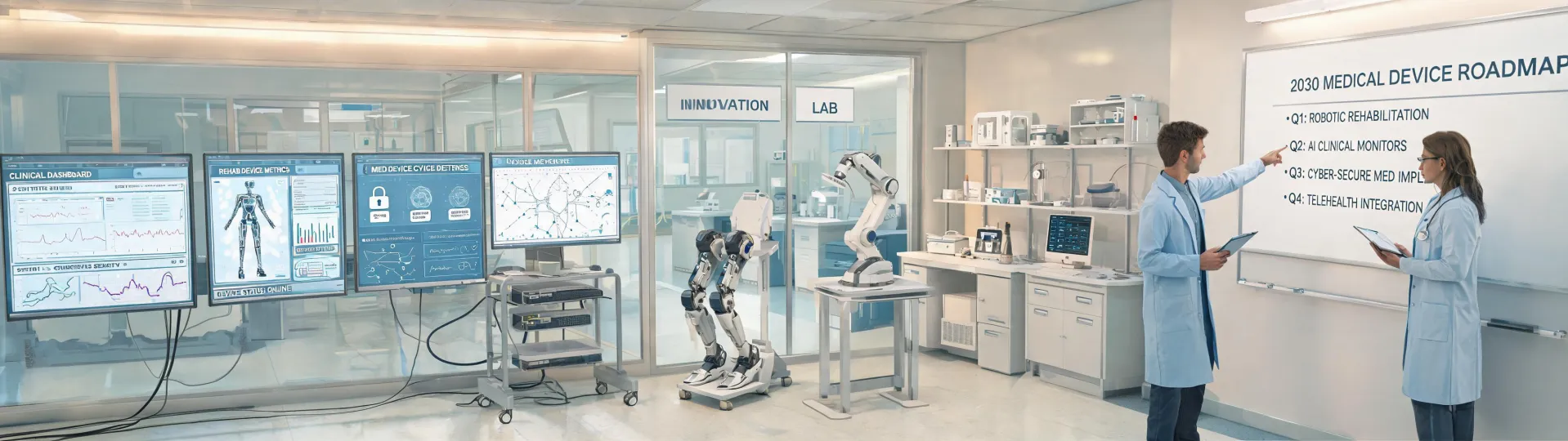
Smith And Nephew uses a roadmap discipline that begins with the realities of hospital purchasing: aging fleets, staffing pressure, cybersecurity scrutiny, documentation overload, and the need to prove clinical usefulness before standardization. Our planning horizon focuses on connected device interoperability, service transparency, product traceability, and lower operating burden.
SBOM-by-default
Software Bill of Materials disclosed for connected monitoring and remote care configurations.
HL7 FHIR deep integration
Structured observations and status events mapped for Epic, Cerner, MEDITECH, and middleware partners.
Post-market evidence loop
Complaint signals, service history, and real-world performance summarized for quality and value teams.
Remote commissioning
Hybrid implementation model reduces travel and accelerates training for distributed care networks.
Lower-carbon installed base
Fleet refresh planning combines energy use, service visits, parts logistics, and device retirement.
Standardized UDI review packets for multi-site purchasing groups.
Expanded remote training content for clinicians, caregivers, and biomedical engineers.
Added cybersecurity documentation review to connected-device proposals.
Aligned service audit templates with uptime, MTTR, and PM compliance metrics.
Integrated value analysis packets across monitoring, IVD, and rehabilitation categories.
Collaborative review model
Our teams work with hospital procurement, infection prevention, laboratory operations, rehabilitation directors, nursing educators, and IT security owners. We do not treat the quote as the finish line. A useful medical device partner must help each stakeholder understand clinical fit, service ownership, privacy impact, training burden, and total lifecycle cost. That is why Smith And Nephew organizes product information into a sequence that mirrors committee review: intended use, comparable device class, evidence summary, interface requirements, accessories and consumables, PM schedule, service tier, risk controls, and transition plan.